1.21.2015

First Frost

First Frost (Waverley Family #2)First Frost by Sarah Addison Allen
My rating: 4 of 5 stars

I read this book in one day because I just had to know -- everything -- it was a delight to revisit the Waverley women and children, to know that Evanelle is still giving things to people because they *will* need them, to witness the good men Sydney and Claire have married, and to get more of a glimpse into the Waverley heritage. Sydney's daughter Bay has become a wise and charming teenager who makes mistakes, just like her mother and aunt, but who has the benefit of a loving, enchanted family to help her when she stumbles.

If you haven't read Garden Spells yet, do -- you will enjoy this installment so much more if you know how the sisters reconnected and how their magic manifests.

I must say - seeing that this is called "Waverley Family #2" has me utterly chuffed: there will be more Waverley books. Yes!

One-half star off because of one storyline that just didn't make it for me - it didn't detract much, but it also didn't add, and I thought it was telegraphed with a heavier hand than Allen's usual delicacy.


I received this book from NetGalley in exchange for an honest review.


View all my reviews

1.15.2015

The Little Paris Bookshop

The Little Paris Bookshop: A NovelThe Little Paris Bookshop: A Novel by Nina George
My rating: 5 of 5 stars

Jean Perdu's great love, Manon, left him two decades ago. Since then, he has maintained a floating bookshop-barge, a Literary Apothecary, on the banks of the Seine. His own heart and life have been hardened; the room in his apartment where he knew great love has been barricaded and left idle.  By day, he dispenses books, suiting the title to the customer with uncanny accuracy, One customer might receive The Elegance of the Hedgehog, while another might be given a poem by Hesse or Tom's Midnight Garden. Only his cats, Lindgren and Kafka, are permitted to touch him; he can not prescribe a book for himself.

Catherine, his new neighbor, has escaped an abusive relationship. When M. Perdu's landlady urges him to donate something to help furnish her new apartment, he breaks into the long-deserted room to fetch a table. He is stunned when Catherine gives him a letter she found in a drawer - a letter from Manon. Unopened.

Tearing open the letter tears him apart when he learns why Manon chose to leave - not for lack of love at all. Suddenly, disappointment and anger become something very different. The young woman he first met on a train from Provence, for whom he prescribed books for homesickness, had another reason to leave him - and he failed her.

Also in the apartment complex is a young writer, Max Jordan, who wears earplugs and wooly mufti to escape the fans who clamor for more, more. He, too, has been abandoned - by his muse.

For much of the book, M. Perdu and Max navigate the the barge through the waterways of France, from Paris to Provence, as Perdu tries to retrace Manon's steps and learn her fate. They are not quite Huck and Jim, but some of their adventures are bittersweet, each meeting people and learning truths about themselves as they float through the countryside.

The book is a love song to love itself, Paris, the tango, food, books, and freedom. Some of the characters and episodes would be at home in "Amelie." Other situations are more like a gastronomic panorama. We learn that Paris is scented "like lime blossoms and expectation," that the air, one day, "was as warm as a brimming teacup." Catherine wanted to be a pirate and a librarian; she serves as M. Perdu's lodestar, and represents the possibility of mature, honest love. We learn of Manon from a diary in which she describes Perdu as a white raven.

If you are hungry when you finish the book, recipes are included for some of the dishes - (a Provencal soup called Pistou, lavender ice cream). Also included: "Jean Perdu's emergency literary pharmacy,"   from The Hitchhiker's Guide to the Galaxy" (to be read "in easily digestible doses... with warm feet and/or with a cat on your lap"), Romain Gary's Promise at Dawn ("...protection against nostalgia for one's childhood"), Robert Musil's The Man Without Qualities ("a book for me who've forgotten what they wanted from life"), and Enchanted April by elizabeth von Arnim, "for indecision and for trusting one's friends."

If I had a literary apothecary, I would prescribe this book to all of my friends.

Thank you, Net Galley, for allowing me to read and review this wonderful book.


View all my reviews
12.30.2014

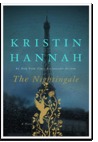
The Nightingale

The NightingaleThe Nightingale by Kristin Hannah
My rating: 5 of 5 stars

Kristin Hannah begins her tale in 1995, as an ailing, elderly woman tells her son that she will not be parted from a steamer trunk that has stood, unopened, for half a century. He believes it contains mundane mementos that can be repacked into a more compact container. He is wrong. Her son loves her, thinks the old woman, but the dependable, ordinary woman he knows has  many secrets.

In 1939, two sisters in France live very different lives. Vianne Mauriac's husband Antoine has just been mobilized. She and their daughter, Sophie, remain in quiet Carriveau. Meanwhile, Vianne's younger sister, Isabelle Rossignol, has been expelled from yet another school in Paris. She briefly works for her father's bookstore, but is forced to flee Paris when the Maginot Line breaks. Along with masses of frightened Parisiennes, Isabelle gets the first hint of the suffering France will endure under the Nazi occupation.

The clashes between the sisters began in their childhood, when their mother died and their father withdrew into alcohol. Even the war does not soften the antagonism between them. Vianne's first concern is the safety of her daughter. She refuses to go along with Isabelle's call to rebel. Vianne believes that the Vichy government will keep them safe, but her hopes shatter one by one.

When the German officer who billets at her home, Beck, informs her that Antoine has been captured, Vianne begins to realize that there are levels of collaboration. Is it wrong for her to cook Beck's meals in exchange for antibiotics, or news from Antoine? Isabelle leaves the village to become a freedom fighter, risking her life to ensure the safety and victory of the Allies.

And what of the old woman? She accepts an invitation to go to paris and attend a ceremony. She is dying, but her son will learn the truth about his family.

Every character, every scene, every flash of history in this novel is a clear look at realities: war, love, courage, and compromise. Vianne and Isabelle embody the experiences and choices that everyday people have to face in wartime. Kristin Hannah has given us a look at the courageous women whose actions may be less-known than those of the heroic men, but who were no less courageous and important.

I received this book from GoodReads in exchange for an honest review. Thank you!


View all my reviews

12.19.2014

The world before her

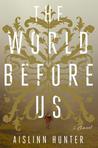
The World Before UsThe World Before Us by Aislinn Hunter
My rating: 5 of 5 stars

The frequent comparisons between this book and A.S. Byatt's Possession are, I believe, misguided. Although both involve dual timelines and long-hidden secrets, Hunter's book focuses on memory, and eschews satire and verbal pyrotechnics.  Instead, she takes us inside the ghosts? shades? spirits? of the long-dead actors in a story connected to a long-shuttered Victorian asylum and a Victorian botanist. She shades struggle to remember who they were, and how their stories intertwined. So does archivist Jane Standen, whose dissertation included the asylum, and whose job is ending at the museum where she works is closing.

She has long been haunted by the disappearance of a girl from the asylum, known only as N, when she and two men walked to the botanist's house. The men returned; the girl did not. When Jane learns who is to speak at the gala for the museum's closing, she flees: The speaker, Jane's first crush, was the father of a little girl, Lily, who disappeared during a walk in the woods - when Jane was babysitting her. Jane goes to the village where both disappearances happened, searching for clues to the disappearance of N, and for clues to the tragedy that has defined her for many years.

An archivist preserves and sorts artifacts that keep the stories of a place and its residents alive. Some stories are more personal than others. N's disappearance might not have caught Jane's attention had Lily not disappeared. Others are less so, at least on the surface. The new owners of the botanist's house are recreating his gardens to be as they were in his lifetime.

As Jane reads the letters, journals, and logbooks, looking for clues into N's life and disappearance, the shades begin to recover their essences. As Jane begins a relationship with one of the gardeners, they also begin to remember how it felt to be alive, how their senses defined them.

The reader gets to absorb complexity in both timelines, and sees how Jane becomes more solid and complex as she assembles clues and allows the present - with risks and uncertainty - to to affect her as much as the past.

I was particularly taken by side-stories about the village and villagers, past and present, which deepened the theme of memory. One example: local miners who gather to remember their experiences as others, trapped, their stories told by the media, are in the long process of being rescued. The subterranean story illuminates the hope for salvation when the men can be brought to the surface to tell their own stories.

So, yes, this book is not Possession. Instead, it is a subtle tale of duality and memory, discovery and connection, which shines in its own, elegant, ultimately beautiful terms.

I received an ARC of this book from NetGalley, and this is an unbiased review.


View all my reviews

11.19.2014

Vanessa and her sister

Vanessa and Her Sister: A NovelVanessa and Her Sister: A Novel by Priya Parmar
My rating: 3 of 5 stars

The Bloomsbury gang loved gossip. So do we aficionados of the gang and its satellites: Virginia Woolf, Vanessa Bell, Clive Bell, Ottoline Morrell, Lytton Strachey, etc.  We read all the novels, biographies, letters, and journals; we delight in their scrapbooks and photo albums. These free-thinking Bohemian friends and lovers were juicy.

This novel casts itself as an olio of Vanessa Bell's writings - journal, letters - plus communications to, from, and amongst the group. The immediate problem is that Vanessa tells us that she's not a writer (and she was not), but the writing she attributes to herself is as adroit and adept as any word-slinger's. Her observations, especially of Virginia, are barbed; their aim is true. The result is great fun to read, if you don't mind a strange version of the unreliable narrator: the words do not fit the character.

That aside, the chronology is accurate, and some characters, especially Lytton Strachey in his bitchy brilliance, are quite memorable. Vanessa's art and Virginia's greed for her sister's attention anchor the novel, which takes place before Woolf or Strachey have published. Vanessa is deeply wounded by her sister and husband, whose never-consummated affair erodes her trust and sours her love for Virginia.

An afterword is included, with notes on what the characters were to achieve. I wish the author had mentioned the sexual abuse that Virginia experienced. Her portrayal as a beautiful, lethal monster, propelled by alternating bouts of mania and jealousy, is incomplete and strange without those facts.

Three stars: fun, with reservations.

I received this book from NetGalley as an ARC. This is an honest review.


View all my reviews

11.18.2014

Chamber Music

Chamber MusicChamber Music by Doris Grumbach
My rating: 5 of 5 stars

This rich novel is cast as the memoir of 90-year-old Caroline Maclaren, being written in the late 1970s at the request of her late husband's charitable foundation. Robert Maclaren was a a composer who was dubbed "America's Orpheus" for his use of American themes in his classical music. The marriage was rich in the world's admiration for his genius, but bereft of emotional depth between husband and wife. As his demands for the silent, solitary conditions he needed for composing became more extreme, Caroline's life became almost unbearably isolated and barren. Even her desire to accompany a singer on piano was thwarted by the increasingly-irascible Robert.

Early in the relationship, Caroline sensed that Robert had secrets that she could not define. There were hints of incest in his mother's behavior, and letters from a young man whose anguish and passion disturbed her. As time passed, his health and abilities deteriorated in a manner that others understood, even as she remained ignorant. She only learned the name of the illness after Anna, the nurse hired to help with his care, told her: syphilis.

Caroline spares nothing in her description of Robert's horrific decline, but says she only realized what it meant in the light of those old, passionate letters when Anna explained how the disease is transmitted.  She found that she did not feel grief, as other widows do:  " I felt none of that, for wife I was only in a sense, and woman I had not yet learned to be."

After Robert died, people from nearby Saratoga Springs helped to create the Maclaren Foundation, building six cabins on the wooded property to house a summer community for young composers. Anna remained and continued to plant flowers and vegetables according to science and ancient gardening lore.

It was Anna's comment about planting turnips and barley while naked that opened Caroline's lifelong repression of her need for love, physical and spiritual. She wooed Anna slowly, hardly understanding how two women can love.

Then, she writes, "I think of the first, soft spring rain; she was moisture to my dried roots... the way a certain configuration of notes played on the flute alone... can bring tears to one's eyes." They held hands and untangled the delicate roots of a wisteria vine. They were happy.

And yet, they never talked about their love: "a fitting vocabulary for such discussions did not exist." She knows now, as she writes, that women can walk together in daylight, but in her own time, "the world would not have sanctioned it, nor, for that matter, believed it of me." In fact, she writes, she is not entirely certain that such freedom is "...entirely salutary, whether the old must of chests, of closets, bell jars, and horsehair sofas is not a better climate for the storage of the private life."

Ah, but Doris Grumbach has no such hesitation. This delicate yet unflinching novel begins with the privileges of a talented man, and ends with the last thoughts of a woman who transcended the confines of her time. Books like this, and Ms. Grumbach's  The Ladies , remind the modern readers that walks in the sunlight are the product of struggles and courage. Caroline Maclaren writes that the Foundation may delete parts of her story, but she will continue to write her extraordinary truth.

Thanks to NetGalley for the book. This is an honest review.


View all my reviews

11.07.2014

As Chimney Sweepers Come to Dust

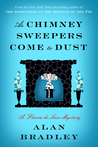
As Chimney Sweepers Come to Dust (Flavia de Luce, #7)As Chimney Sweepers Come to Dust by Alan Bradley
My rating: 5 of 5 stars

Delectable. Like all of the books that star Flavia de Luce, this installment is a confection. The setting has changed because Flavia has been banished (three syllables, please!) from her beloved home in England. We meet her on the ship carrying her to Toronto and her new home - Miss Bodycote's Female Academy. She is heartbroken. Her mood lightens, however, when a body falls out of the chimney in her new room. Wouldn't anyone's?

The investigation reveals that girls have gone missing, her mother's membership in a secret society may be connected to the odd tasks she is given, and her new chemistry teacher is a soulmate who was once tried for murder. Some of the students seem to hint at her anticipated initiation into the society; others are brutes. Add to the mix the possibility of poisons (her favorite subject) and the changes she is going through as she turns twelve and begins to have unusual mood swings. Pour a cup of tea (and check the brew before you sip) and enjoy!

I received an ARC of this book from NetGalley. This is an honest review.


View all my reviews

9.20.2014

Accidental Alchemist

 The Accidental AlchemistThe Accidental Alchemist by Gigi Pandian
My rating: 4 of 5 stars

How many authors could bring a stone gargoyle to life and make the reader care for him as much as they would care for a human? Gigi Pandian has done this in the first of a series of mysteries that will feature Dorian Robert-Houdin as a French gargoyle who needs the help of herbalist Zoe Faust to survive. A murder at her newly-acquired wreck of a house and the theft of Dorian's book of alchemy cast Zoe back into long-forgotten alchemical mysteries (as well as into the path of a detective whose knowledge of teas and such are both intriguing and puzzling), along with a teenaged who seems determinded to learn alchemy - and gourmet cooking from the talented Dorian.

A few instances of too-much-information that distract rather than enlighten took a star away from my rating, but I do recommend this book as a promising romp.

Recipes and ideas for teas dot the narrative.

I received an ARC of this book from NetGalley. This is an honest review.


View all my reviews

That summer

That SummerThat Summer by Lauren Willig
My rating: 5 of 5 stars

It's rare when a novelist can present two timelines that are both fully-realized. Lauren Willig accomplishes this - and more - in her stories about a Pre-Raphaelite painter and his love, and an antiques dealer and his love. I was so enthralled by the Pre-Raphaelite painter's story that I wished Gavin were as real as Rosetti.

Gavin's Imogen, an unhappily-married woman, was in a situation much like that of Dorothea in Middlemarch: married to an intellectual whose work she had longed to share. In the present, both Julia and Nicholas have issues to work through while investigating obscure Pre-Raphaelite paintings found in the house she has inherited.

The stories mesh and veer, as stories do, in a novel that is totally satisfying and engrossing, despite the centuries or geography that divide the reader from them.  Highly, highly recommended!


View all my reviews

8.19.2014

Under the wide and starry sky

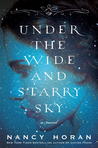
Under the Wide and Starry SkyUnder the Wide and Starry Sky by Nancy Horan
My rating: 5 of 5 stars

Fanny Osborne and her three children have left husband and father in America, leaving him to his infidelities and infelicitous business adventures so that Fanny and daughter Bella can study art in Europe. Driven to France after sexist rejection and personal tragedy in Antwerp, Fanny finds rest and community at an artist's colony in France. There she meets the well-travelled, brilliant Robert Louis Stevenson and his long-time friends.

Stevenson is smitten. Fanny needs convincing. He has many stories to tell - the battles he staged with toy soldiers on his childhood counterpane during long bouts of illness, the exploits of his lighthouse-building family, his friendships with literary luminaries including Leslie Stephen and Henry James, and his habit of listening to people who speak with elegant diction despite deplorable teeth. He was been published, and hopes for a wider audience for his travel writing and fiction.

Fanny, by now a writer herself, is torn between loyalty to her marriage and deep devotion to the enchanting, yet fragile writer; ultimately she marries him, and is present for the creation of his masterpieces, including Dr. Jekyll and Mr. Hyde and Treasure Island.

This is a not an easy marriage. He is forced to spend long periods in rest homes for his diseased lungs. She convinced that her own literary aspirations have been sabotaged by his fame. When it becomes apparent that he only is truly well while at sea, where she is chronically seasick, she accompanies him to the South Pacific. There they create a paradisaical yet practical home, with vegetable gardens (supplemented by seeds from Gertrude Jekyll) and beautiful flowers.

I was struck by the breadth of friendships that RLS enjoyed: Henry Adams, John Singer Sargent, Fanny Sitwell, poet William Ernest Henley (author of "Invictus"). The world of creative and intellectual people seemed small despite the distances, and yet, unreliably slow mail delivery made it impossible for the Stevensons to respond quickly when friends betrayed them. Praise and loyalty from stalwart friends and supporters, Henry James foremost among them, was always sweet.

Robert's physical breakdowns and Fanny's mental breakdowns are set against the splendor of the tropics and the clear beauty of the California coast. Horan's writing is clean and precise, letting the subjects shine.

Highly recommended.


View all my reviews

7.24.2014

Lisette's List

Lisette's List: A NovelLisette's List: A Novel by Susan Vreeland
My rating: 5 of 5 stars

A spectrum of colors created from ocher, mined and mixed to create a palette for Cezanne. Lavender growing wild and scenting the Provencal village of Roussillon. Fresh goat cheese and eggs in a creamy omelette. Gritty marzipan on your tongue. An old man's voice, telling stories that stitch together two centuries of art.  All of the senses are engaged in Lisette's List, a novel about the power of art to engage the human instincts to survive, learn, and grow.

Lisette and André Roux love Paris, where they have been building a life amongst the galleries and cafes filled with art and artists. Reluctantly, they move to Roussillon to care for Andre's grandfather, Pascal, who has written to them, exaggerating his illness. Pascal is eager to pass on the paintings he purchased by working as an ocher miner and frame-maker for artists, including Cezanne and Pissaro. More, though, he is desperate to pass on his memories of these men, and his own wisdom about art, from appreciation of techniques and color to his near-mystical belief in the power of art to expand one's life.

While André looks for work, Lisette tends the house and listens to Pascal, whose tales are sculpted from detailed, annotated lists he has written. Lisette begins a list of her own, "Lisette's List of Hungers and Vows," beginning with "Love Pascal as a father." Her list grows throughout the book as she experiences heartbreak, learns to live and love in the small village, and searches for Pascal's paintings, which André concealed before he went to war.

Vreeland provides glimpses into the German occupation in Provence, how some in the resistance had to compromise, and the Nazi destruction of art deemed "decadent." She displays the spectrum of ocher - from deep cadmium yellow and gold through maroon and cream, in a fictional, composite still-life by Cezanne, where the colors delineate the artist's choice of shapes, and support his artistic play with gravity and perspective. Gravity is also a plaything for Marc and Bella Chagall, hiding in a nearby house, painting joyous portraits or people who play violin on the roof and communicate with God.

("Try not to be envious," writes Lisette. "Learn how to be self-sufficient.")

Twice, Vreeland evokes a particular, peaceful, silent scene -- once, when Lisette and André's friend Maxime observe a magpie who alights on a snowy fence rail, and once, when they see Monet's painting of that scene. Moments like these, with Vreeland's knowing commentary, bring the reader along as Lisette and a shell-shocked veteran come to terms with the war that split apart their lives, and travel along the path to healing through art and forgiveness.

Note: the paintings and photographs of the village are posted at Susan Vreeland's website, along with quotes from the book. Do look at them as you read.

Thanks to NetGalley for an ARC of this book. This is an honest review.


View all my reviews

6.12.2014

The Goddess of Small Victories

The Goddess of Small VictoriesThe Goddess of Small Victories by Yannick Grannec
My rating: 2 of 5 stars

A novel with two parallel storylines ought to be in a state of dynamic equilibrium, with forces from both narratives balancing and advancing each other. The Goddess of Small Victories does not achieve that balance. Adele Gödel, the goddess, relates the small victories,the daily balancing acts she performed to keep her frail, unstable husband from collapsing under the weight of his genius, eccentricities, and paranoia. Her husband, Kurt Gödel, was the mathematician whose Incompleteness Theorums revolutionized higher mathematics by proving that axioms within a closed system cannot be proven from within that system. She found that to be true in her life, as well, since she was excluded from the processes and debates that Gödel and his circle debated endlessly, without much reference to the mundane world without.

She relates these stories in flashbacks, as she lies dying in a nursing home, to Ann Roth, an archivist at the Institute for Advanced Study, whose director tasks her with acquiring Godel's papers. Anna is not a stranger to the IAS, having been raised nearby in an atmosphere that rewarded the type of excellence it represented, and left her feeling unnecessary when she did not reach its level.

In alternating chapters, the women share stories from their lives - Adele's price for considering Anna's request. Adele talks about being a dancer in Vienna who marries the almost-unknowable Kurt. His lifestyle demands are specific and constricting; they are the matrix he requires to survive. Their lives are turned to chaos by the beginnings of World War II. Before they can escape Austria, they endure a terrifying encounter with Hitler's street thugs, who bully Kurt and equate mathematicians with Jewishness. A grueling trip across Siberia and the Pacific lands them in the United States, and, eventually, at Princeton. This is a fit destination for Gödel. Not so, initially, for Adele, whose English is weak and whose life is ruled by Kurt's demands.

Some of Adele's small victories are the bits of respect from her husband's genius friends, including Robert Oppenheimer and Albert Einstein. They become regulars at the Gödel house, where they discuss mathematics, physics, politics, and metaphysics while praising her cooking. Decades later, Adele has learned enough to repeat and discuss some of the concepts with Anna, as if to prove her own worth after many years of having been nearly invisible in her husband's world.

Anna's story? Almost irrelevant. She, too, is a handmaiden to the geniuses of the Institute. The details are not particularly compelling until she begins to take some chances, goaded by the still-vibrant Adele.

The weakness of Anna's story is compounded by the portions of Adele's that read like extended Cliff's notes for concepts that range from Gaussian curves, quantum mechanics versus Newtonian physics, set theory, variable infinities, and amicable numbers. The metaphysics delve into whether the existence of God can be proven through mathematics. Even a slightly-knowledgeable admirer of these subjects will lose the narrative thread while reading fictional discussions that alternate between the paradoxes inherent in time travel, and the excellence of Adele's cooking.

The book includes copious footnotes, afternotes, and a thorough dissection of what (and who) is fictional in the book. Students of these subjects may find them useful. I found it disturbing that the author takes the position that came to believe in God, since one of his last lettters disproves it. The book was, overall, disappointing. Two stars for interesting me enough to read up on amicable numbers.

I received an ARC from NetGalley. This is a fair review.


View all my reviews

6.02.2014

The Romanov Sisters

The Romanov SistersThe Romanov Sisters by Helen Rappaport
My rating: 5 of 5 stars

All biographies are written in the context of history. The question facing a biographer -  how to balance the lives of individual flesh-and-blood people with the events - is made even more difficult when the events were, to a degree, controlled by the people she is writing about.

What Helen Rappaport has achieved in The Romanov Sisters is a portrait of a family that could be any family, save for the exigencies of dynastic marriage, unimaginable wealth, and the paradigm-shattering events of the early twentieth century. These four sisters - Olga, Tatiana, Maria, and Anastasia - were real babies, real flesh-and-blood children, awkward teenagers, and accomplished young women, and they were murdered as political prisoners.

The reader learns about each girl as she passes through each stage of a young life. One girl is quiet, one is rambunctious; one cares about clothing and hair, one has a weight issue. Each life is detailed with precision and objectivity, without judgement. And, each sister is shown to have been loving, caring, and tender towards her parents, and her grievously-ill brother, Alexei.

One stunning part of the book deals with the royal family's response to the European War. Alexandra, Olga and Tatiana became fully-trained, full-fledged nurses who worked countless hours in the most dramatic areas of the hospitals by day, dressing horrific wounds, participating in amputations and treatment of hideous gangrene, while returning to the hospitals by night to sew linens, roll bandages, and knit garments for soldiers. Both sisters had reached an age where most would be developing crushes on young, handsome men. Both did.

The younger sisters also worked amongst the suffering wounded, as well as doing the expected visits and reviews. Even Alexei served by accompanying his father to battle areas, despite the danger to his fragile health.

This was a family that understood duty beyond noblesse oblige, and set aside its own comfort to serve the victims of politics. As a family of father, mother, and children, it was quite normal. Alexandra was disdained because she breast-fed her children instead of hiring a wet-nurse. The children were simultaneously considered ill-mannered (by sniffy outsiders) and refreshingly typical (by other outsiders). Royalty, privilege, and wealth could not cure Alexei or ease his suffering. Rasputin, both rake and staretz, provided some relief. Rappaport reports, but does not judge.

This biography is written in a detailed, yet clear and flowing voice that leads the reader through the tangles of dynastic interrelationships as easily as it describes the daily life of a doomed family.  It leaves judgments and comparisons up to the reader.

Highly recommended.

I received an ARC from NetLibrary. This is an honest review.


View all my reviews

5.24.2014

Murder Past Due ; and, Classified as Murder

Murder Past Due (Cat in the Stacks Mystery, #1)Murder Past Due by Miranda James
My rating: 5 of 5 stars
Very nicely-done mystery set in a library, with well-limned characters, including an enormous, empathetic Maine Coon cat with more empathy than many humans. I'm looking forward to reading the whole series.

View all my reviews


Classified as Murder (Cat in the Stacks Mystery, #2)Classified as Murder by Miranda James
My rating: 5 of 5 stars
Another solid, funny, engaging mystery from Miranda James about a Charlie, a retired cataloger, and his enormous Maine Coon cat, Diesel. Not quite cozy, not quite non-cozy - beautifully-plotted, with an expanding cast of characters and the kind of continuity that only an author who allows her characters to evolve can provide.

In this outing, the body in the library is an old rare-book collector.  The suspects are family members whose lack of affection for each other is topped only by the old man's disdain for them, displayed in a spot-on, poison-pen will that few people would be gutsy enough to write. My only complaint about this book (and its predecessor) is that Charlie's friend Helen continues to supply him with chocolate cake that sounds so delicious that I want a piece...

Highly recommended!


View all my reviews

5.16.2014

The end of innocence

My rating: 5 of 5 stars
Startling and powerful, this novel examines opposing forces during and after the first World War, with conflicts that are deeply personal as well as political. Harvard sets the stage for Helen, the Americn daughter of a conservative scholar and an activist mother, to meet Wils and Riley,  German poets and cousins, whose German and British ancestries land them on opposing sides in the European trenches. Campus politics echo the intense jingoism and violence of the time as the war intensifies overseas, with students acting on these deep prejudices and going to fight even before the United States is officially in the war.

Helen and Wils are soulmates in poetry and temperament, but poetry can not keep the war from ripping their lives apart.  Each character, major or minor, fights a war against modernism, or prejudice, or the status of women. Each conflict has consequences that are defined and defied during the war, and after.

I was shocked by an afterword: the author was inspired to write the book by a very real plaque in Harvard's Memorial Church, one that exemplifies the incoherence of society's response to war heroes, alive or dead.

Highly, highly recommended.

I received this book as an ARC from NetGalley. This is a fair review.