Showing posts with label NetGalley. Show all posts

6.08.2017

Save a horse ride a cowgirl

Save a Horse Ride a CowgirlSave a Horse Ride a Cowgirl by Ann Beattie
My rating: 4 of 5 stars

Although Ann Beattie's characters have aged, their world is still recognizable even if their faces and bodies have changed. Many now can afford luxuries, like a showerhead "which approximated a rainstorm that would fall with enough force to blind frogs." Some live in assisted living facilities, petting dogs brought by well-meaning volunteers. If they still live at home, their garden paths are aglow with "solar spotlights allowing the stamens of flowers to puncture the night like so many silent tongues."

One thing that has not changed: most characters are distinguished by the things they still carry, and the references they learned when they were young. Dr. T. D. Eckleburg makes an appearance at a party celebrating Bernie Madoff's sentencing, and when characters dance, the music is not new.

One other thing these characters have in common: they all want to retain control and to shape the narration of the rest of their lives. The reader sometimes listens in as a character relates his or her own actions, blurring the authorial line between showing and telling. Even a dog, whose ears "looked like someone had given up while folding origami," tells us about his view of the lifelong search for love.

Not all of these character-driven stories hold together in the longer form they are given. Maybe Ms. Beattie means for us to lose patience with some. Some characters, though, open themselves to live in old age with people they might not have noticed before, sometimes literally. Those make the reader cheer, and cheer up.

Ms. Beattie's writing is a bit less sparse than it once was, but no less wry or sharp. The details still matter -- the boots, the music, the wine. One looks at people disappearing up a flight of stairs, perhaps "to the roof, from which they'd take flight and clutter the night sky, for all she knew." The reader doesn't know either, but she has met them, and they are real.

Highly recommended. I received this book as an electronic ARC from Net Galley.


View all my reviews

5.30.2016

The summer before the war

The Summer Before the WarThe Summer Before the War by Helen Simonson
My rating: 4 of 5 stars

How controversial is a Latin teacher named Beatrice? In 1914, in the small English town of Rye, a woman teaching Latin is shocking. Shocking! Beatrice Nash, who was her scholarly father's assistant, travel agent, and budget manager until his death, has two choices: remain at her stingy and disapproving aunt's house, or work. She chooses work.

Rye, although its more titled and tony citizens are conservative and easily shocked, has undercurrents of sophistication and modernity that Beatrice taps into immediately. She meets a serious surgical student, Hugh, and his flamboyant, poetic cousin, Daniel, both watched over and protected by their aunt Agatha. Her students include Snout, a Romany boy whose innate talent for Latin is suspect in his own community and the outside. Circumstances also bring her into the circle of notable residents, including a freethinking woman photographer, a novelist whose entry into social circles is blocked because of a divorce in her past, and a portly, portentous novelist who clearly is styled on Henry James.

The peaceful summer is the prequel to England's entry into the War. Many local men are called to fight in the bloody trenches, hospitals, or officer corps. How the townspeople adjust depends not only on their wealth, title, and status, but also the emotional toll of expectations and loss.

What will the dreamy Daniel do when his partner-in-poetry, Craigmore, is forced to enlist when his father hears Daniel's scandalous poem about his son? What of Snout, who realizes that his Romany heritage will mean that he will never have the opportunity to use his scholarship? And how will the haughty townspeople react to the hoardes of Belgian refugees they are forced to take in?

The gentry set up super-patriotic organizations, including a chapter of the St. George Recruitment Brigade, in which fetchingly-dressed young women pressure young men to enlist, handing those who resist a white feather, symbol of cowardice. They also plan a parade and exhibition, including Daniel's model trench, tastefully decorated and supplied with shelves for books of poetry. Marrows are judged, young people pick hops and dance, students translate the Aenid before they march off to war. So it goes.

The texture of life in Rye changes with some room for growth and tolerance, and with tragedies mixed in with the small but vital victories, both personal and political. As in Simonson's first book, Major Pettigrew's Last Stand, the reader gets to know this texture, and comes to care about - and root for - the townspeople and the town.

Highly recommended. One star subtracted because the ending seemed disappointingly hasty.

I received this book as an ARC from NetGalley in exchange for a fair review.


View all my reviews

2.12.2016

Devonshire Scream

Devonshire Scream (A Tea Shop Mystery #17)Devonshire Scream by Laura Childs
My rating: 4 of 5 stars

Another delicious, fragrant tea shop mystery? Yes, of course! This time, Theo is catering a glittering jewelry show in her friend's store when a gang of ruthless thieves break through the windows and glass cases. Not only do the jewels get nabbed, but her friend's young niece is killed by a deadly shard. Over the next few days, Theo's sleuthing reveals many suspects, from wealthy yacht-owners to literary outliers. Will she be able to help nab the guilty without endangering herself or her friends?

She also gets to serve up some truly splendid-sounding theme teas. Don't try to read this book unless you have a steady supply of hot, aromatic tea and nibbles handy.

I took off one star because of a bit of haphazard characterization that really doesn't impact the story, but proved a little distracting.

Thank you, NetGalley, for the ARC. This is a fair review.


View all my reviews

1.25.2016

Knitlandia

Knitlandia: A Knitter Sees the WorldKnitlandia: A Knitter Sees the World by Clara Parkes
My rating: 5 of 5 stars

Clara Parkes, whose first subject as a professional writer was travel, takes us on a tour of knitting and fiber festivals. Some of her adventures as a yarn evangelist are set in venues that thousands of knitters have shared -- Rhinebeck, Taos, Scotland, Portland, Maryland. Some tell background stories of festivals and events we dream of attending - Squam, TNNA, Vogue Knitting Live, Madrona. We are there at Sock Summit for the first knitting flash mob, we are in Denver to film "Knitting Daily" (as she is encased in makeup that makes her feel "like Ronald MacDonald in drag," and we go along on a tour of sheep-intensive Iceland. Always, there is pho, her comfort food, and yarn, in all of its incarnations and manifestations.

My favorite moments are in Paris, where she breaks a promise (no yarn! just family!) and visits a petting zoo of a shop" that offers yarn and tea. Years before, she tells us, she fell in love with fountain pens in Paris. How can anyone not be delighted with this book?

Thanks to NetGalley for the review copy in exchange for a fair review.


View all my reviews

1.09.2016

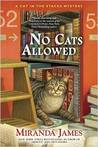
No Cats Allowed

No Cats Allowed (Cat in the Stacks, #7)No Cats Allowed by Miranda James
My rating: 5 of 5 stars

Librarian Charlie Harris and his insanely huge large Maine Coon cat, Diesel (so named for the quality of his purring) are trying to be civil to the interim library director, but he's such a conniving, foul creature that even the ever-affectionate feline can't abide him. The feeling is mutual, as Charlie learns when the mean man bans his cat from the library, fires people without warning or reason, and acts as if he is out to change the workplace into a gulag.

If only those were the only problems facing the pair! The cat-hating ogre creep is killed in a uniquely library manner, to no one's real surprise or dismay, but the clues are pointing to Charlie's friend Melba instead of - well, instead of to whom?

I've loved each of the "Cat in the Stacks" mysteries for their humor, cheerful depiction of small-town habitues, and - of course - the wonderful, vocal Diesel. Librarians will love the spot-on depictions of behind-the-stacks goings-on. Recommended to anyone who loves well-written mystery series.

I was given an ARC of this book for review by NetGalley.


View all my reviews
12.24.2015

Loving Eleanor

Loving EleanorLoving Eleanor by Susan Wittig Albert
My rating: 5 of 5 stars

This book is excellent on so many levels! As fiction, it enchants, as reporter Lorena Hickock meets, loves, and mentors Eleanor Roosevelt, whose aversion to being a public persona is transformed - to the benefit of the United States, but not always those who love her. How much time and energy can one woman have?

Based on extensive research, including the enormous trove of letters between these two fascinating women, Loving Eleanor is a glimpse into the life of a pioneering woman journalist, and the times she reported on - including the most dire poverty of the Depression. Without Hick's advice, Eleanor would not have written the columns ("My Day") that endeared her to the masses. Without Hick's reporting (and company on trips to mining camps), Eleanor's understanding of how people were suffering would have been secondhand.

Some of the details in this book, such as the lives of people so poor they could only offer a bowl of tumbleweed soup to visitors, are so graphic that your heart will ache. Others, such as the gradual realization by Hick that the post-political idyll she wanted for herself and Eleanor will never happen, are heartbreaking in a very personal way.

I'm grateful to Albert for including endnotes and an extensive bibliography -- I want to learn more about both of these women, and their times.

Recommended. Thank you, NetGalley, for giving me an ARC to read and review.


View all my reviews

10.24.2015

The Lake House

The Lake HouseThe Lake House by Kate Morton
My rating: 4 of 5 stars

Past and present mingle and meet in two English houses. One, a huge and crumbling house on a lake, was where a baby boy disappeared during a gala Midsummer's Eve party in 1933. The other, a small home in Cornwall, is where a widower resides with the tangible and ineffable memories of his beloved wife.

Sadie Sparrow, a metropolitan detective, is visiting her grandfather, on leave from a case she took so personally that the violated protocol: the disappearance of a young mother, who abandoned her baby in a London flat. While taking a long run through a thick forest, she discovers Loeanneth in ruins, and decides to investigate. The locals have long memories and computer files that lead her to the lost baby's elderly sister in London, now a secretive and popular author of a long-running series of mysteries. She decides to allow Sadie to unlock the house, possibly to unlock the unsolved tragedy.

Both houses are presences, especially Loeanneth,which begins to reveal its secrets to the motivated detective and the reclusive writer. Letters, diaries, abandoned manuscripts, and the crumbling artifacts of passions spent lead Sadie deep into the secrets of a once-vibrant family, broken by wars and loss.

Except for the ending, which is a bit too tidy, this book is a splendid two-tiered tale, with homes that become characters in the spirit of Rebecca's Manderley and Howard's End.

4 1/2 stars.
I received an ARC of this book from NetGalley, and this is a fair review.


View all my reviews

10.09.2015

The Hours Count

The Hours CountThe Hours Count by Jillian Cantor
My rating: 3 of 5 stars

Whatever else you know about Ethel and Julius Rosenberg, one thing is true: they were the parents of two young sons. Julius had already been arrested when Ethel was called to testify before the Grand Jury on 11 August 1950. She was not given so much as a minute to make arrangements for the care of their two young sons when she was arrested immediately after testifying. One minute, she was a proper Jewish housewife and mother, wearing white gloves. The next minute, she was in custody, charged with typing her husband's notes. Whatever else you know, going into this book, realize this: ultimately, she was executed for typing. Not stealing or passing atomic secrets to the Russians. Typing.

The story is told by Millie Stein, a fictional neighbor in the apartment complex where the Rosenbergs last lived. Millie is married to Ed, a brutal Russian Jew, whose indifference to their son (probably autistic, lacking language skills) contrasts cruelly to the love and warmth in the Rosenberg family. Although Millie knows that her husband attends political - probably Communist - meetings, she is shocked to learn that he has known the Rosenbergs for years.

Ed grudgingly allows her to accept an invitation to a party at the Rosenbergs' apartment after she and Ethel become friendly, bonded by their children and shared concerns. Ethel has secretly steered Millie to Planned Parenthood for birth control, which would enrage Ed, who threatens to institutionalize their son unless she has another, "normal" child. Millie has kept secrets for Ethel to protect her privacy in the neighborhood.

Secrets are in the air at the party, where spying, lying, and politics are discussed by partygoers, including David Greenglass (Ethel's brother), his wife Ruth, and Morton Sobel, all of whom figure in the betrayal and death of the Rosenbergs. Millie also meets another (fictional) character there, a psychologist named Jake, whose promise to help her son develop language skills leads her down yet another dangerous, secret path.

Since the events that lead to the arrests, trials, and executions are only glimpsed by Millie, it can be frustrating to pick them out of the narrative. Both her husband and the therapist advance the plot without significantly enlightening the reader, since each has his own agenda, and the reader is as bewildered as Millie. Some of those glimpses are so ordinary, yet so meaningful - Julius playing with his son in the park, Ethel cooking a chicken. Others, just as true, are horrific, such as the government agents scooping evidence out of the apartment as Ethel pleads with them to spare the recording she had made of her voice, hoping they would know what she sounded like if she was gone.

Millie's plight as an abused woman who puts her trust in anyone who is kind to her and her son is vivid and heartbreaking, but her moments of clarity and insight into her husband's true business are made less believable by her ignorance of the world. Still, this detailed look at the last free days of the doomed couple is gripping and thought-provoking. The author provides a reading list. I care enough about the disquieting evidence of official malfeasance to learn more.

3 1/2 stars.

I received an ARC of this book from NetGalley; this is a fair review.


View all my reviews

9.01.2015

The Lemoncholy Life of Annie Aster

The Lemoncholy Life of Annie AsterThe Lemoncholy Life of Annie Aster by Scott Wilbanks
My rating: 5 of 5 stars
This book has everything that I love: magic, time-travel,letter-writing,  unusual characters who find each other and form a loving little community, wit, intelligence, historical verisimilitude, and smatterings of quoted Tolkien.

I often say "If you liked The Night Circus..." - I'll say it again.

Utterly delightful. I read it in two days, and will read it again.

Thank you, NetGalley, for the ARC. This is a fair (and exuberant) review.


View all my reviews

8.25.2015

Swans of Fifth Avenue

The Swans of Fifth AvenueThe Swans of Fifth Avenue by Melanie Benjamin
My rating: 4 of 5 stars

Sometimes, even the wealthiest, most glamorous, most fêted superstar feels like a motherless child. Once Bobolink (Babe Paley) and True Heart (Truman Capote)were introduced, they were soulmates because their mothers, although present, were emotional bullies, leaving empty spaces and empty rooms that the socialite and the flamboyantly gay writer could fill with confidences and true vulnerability.

They met before Capote's success with Breakfast at Tiffany's. She and her husband welcomed him into their world and opened themselves to him even more than to each other - only Truman was allowed to see Babe's unpainted, scarred face. Not her husband, William Paley, nor CZ Guest, Slim Hawks, Gloria Guinness, Pamela Harrison, or any other the other glittering socialites had a clue about the renowned beauty's inner insecurities. From party to party, social event to lavish vacation, Truman and the Paleys partied and gossiped and lived the life of true excess that filled newspaper columns about the rich and famous.

How did it all go so wrong? After In Cold Blood, Truman faced a writer's block so deep that only excesses of drugs, alcohol, and Studio 54 could distract him. Although his beloved Babe was succumbing to lung cancer, he used the materials he had gathered - the gossip, innuendo, backstories - and exposed Babe and her circle in a story he published in "Esquire" - “La Côte Basque 1965” - destroying the illusion of their beautiful lives, and, effectively, committing social suicide.

Almost everyone in this book is seedy, gossipy, and unpleasant. Benjamin captures the rhythm of their language (especially Capote's) and the spectacle of their lives so well that you only realize afterwards that you have just read about truly awful people. The planning and execution of Capote's Black and White Ball are especially vivid, especially when the younger celebrities such as Mia Farrow and Penelope Tree leave with Frank Sinatra and the party collapses.

Four and 1/2 stars - close to completely enchanting.

I received this book as an e-ARC from NetGalley, and this is a fair review.


View all my reviews

8.20.2015

The Haunted Season: A Max Tudor Mystery (A Max Tudor Mystery, #5)The Haunted Season: A Max Tudor Mystery by G.M. Malliet
My rating: 4 of 5 stars

I was a little disappointed. Not that Max and the residents of Nether Monkslip are any less fun to read about -- their squabbles, their power-plays, their baking... -- but there were so many characters in this outing that they quite blanketed the murder. Still, it was fun to read about the annual Duck Race (not that they race actual ducks, you understand), the internecine doings of the village ladies, and the Baaden-Boomethistles - lord and lady of Totleigh Hall, with the utterly perfect Dowager, a combination of Barbara Cartland and "Downton Abbey"'s Countess Violet.

I received an ARC of this book from NetGalley.


View all my reviews

8.18.2015

Wylding Hall

Wylding HallWylding Hall by Elizabeth Hand
My rating: 5 of 5 stars

Elizabeth Hand channels the summer of 1972, deep in an ancient English forest, where five young musicians are secluded from the world, creating their masterpiece. Their Child ballads, mystical and mythic original lyrics, virtuoso musicianship, and sense of wonder have been disorganized and derailed by the death of their lovely lead singer. Their manager thinks that Leslie, with her strong voice and lyrical skills, will energize the music and the remaining members of Windhollow Faire.

Wylding Hall reveals itself as a portal to very old magic, perhaps older than the perspective-bending barrow deep in the woods. By the time the young musicians record the album during a spontaneous outdoors session - photographed haphazardly by a young teenager with his first Instamatic - each member has been wounded by a mystery, and has discovered uncanny links to past tragedies. Have they also seen a ghost?

The short novel is structured as the transcript of a 21st century documentary, narrated in turns by each of the band members and participants - all but one, the beautiful, brilliant Julian, whose disappearance decades before was linked to a very strange young girl, and a very strange melody...

Did you enjoy Uprooted by Naomi Novik? Do you eagerly await the work of Charles de Lint or Pamela Dean or Terri Windling? Does your playlist include Loreena McKennitt, Pentangle, Steeleye Span, or Fairport Convention? This is your book. Anyone who loves folk-tinged fantasy will love it too. The only thing that will disappoint you: there is no soundtrack. Maybe someone will put together a Spotify list.

I received an ARC of this book from NetGalley.


View all my reviews

7.07.2015

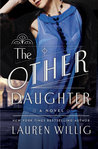
The Other Daughter

The Other DaughterThe Other Daughter by Lauren Willig
My rating: 4 of 5 stars

Rachel always thought her father was a botanist who died while he was away on a trip. Throughout her childhood, her mother maintained them as a respectable, if poor family. At the beginning of this engaging novel, Rachel has returned from seven years as a governess in France to find that her mother, dead of influenza, has kept secrets from her, secrets that change her life in ways she could never have dreamed: her father is neither dead nor a botanist. He is an earl - and he has another daughter!

Despite her loving cousin's protests, Rachel's feelings of betrayal lead her to concoct a scheme of revenge with Simon Montford, a handsome gossip columnist who has his own reasons to want to hurt the earl - and the other daughter. Their adventures amongst the glitterati of Jazz Age London and the earl's family change many lives, and will entertain the reader throughout.    

I received this ARC from NetGalley in exchange for a fair review.I also received a copy of the book from St. Martin's Press. Thanks to both!


View all my reviews

7.03.2015

Circling the Sun

Circling the SunCircling the Sun by Paula McLain
My rating: 5 of 5 stars

Early in this novel, young English expatriate Beryl Markham (nee Clutterbuck) is almost eaten by a lion. Paddy is kept on a neighbor's property and considered tame, but her father knows better: "he can only be exactly what he is, what his nature dictates, and nothing else." She already has been abandoned in Kenya by her mother, taught more about horses than society by her father, and befriended by a Kipsigi warrior and his son, Kibii.

She longs to be a warrior, too, but has been told it is impossible for a girl. Besides, says her friend, no one would ever know about her triumphs. "I would," she says. "Where's the glory in that?" he asks.

Young Beryl goes on to achieve many bold triumphs, and the world comes to know them. She becomes the first woman to be certified as a horse trainer (and thoroughbred breeder, with Kibii, now a warrior named Ruta). She becomes the first professional female pilot in Africa. Like the lion whose scars she bears, she can be sociable, she can do what others expect, but she can not deny her own wild nature -- not in the world of horses, not in the air, and not in love.

Thrice-married, she and Karen Blixen formed two sides of a love triangle with the doomed aviator, Denys Finch Hatton, whose death drove Karen Blixen back to Denmark, where she became Isak Dinesen and enchanted the world with Out of Africa. His death drove Beryl into the sky, where this novel begins, as she becomes the first person to fly solo across the Atlantic from east to west.

Much of the novel takes place in and around Nairobi during the 1920s. The Happy Valley expatriates are contrasted with the lives of the farmers, animal breeders, and hunters who claimed the land for England. They may have been fooled if they they thought Africa could be tamed. Like the hungry lion, land and people will always retain their true and best nature.

The reader will be entranced, horrified, and engaged fully while reading this book - and after.

I received this book as an ARC from NetGalley in exchange for a fair review, and in physical form from Random House. Thanks to both. 


View all my reviews
4.22.2015

Hugo & Rose

Hugo & RoseHugo & Rose by Bridget  Foley
My rating: 4 of 5 stars

High-concept books require readers to buy into the premise - in this case, that a woman, Rose, has been dreaming about a fantastic island and playmate, Hugo, since she was recovering from an accident at age six. Every.Single.Night. The island is a whimsical affair, with sparkling pink sands, weird foes to be vanquished, and landmarks such as Castle City and the Green Lagoon. Hugo leads their adventures aboard the Plank Orb, and flying above Spider Chasm.

Rose marries Josh, a surgeon, and has three little children. Although she continues to have the dreams, she ages, as we all do, and is vaguely dissatisfied with what she calls her "sweatpants years." On the island, in her dreams, she is still beautiful and fit, as is Hugo, even though both have aged in the dreams. "Of what consequences are the dreams of housewives?" she wonders, retreating into sleep and feeling alienated from the other mothers.

Her husband and children have participated vicariously in the dream-world via the stories they have adopted as a shared mythology. They look forward to their bedtime play with the Tickle Monster, and they build a LEGO replica of the island.

Of course, the impossible becomes possible one day when she drives a carload of hungry, grumpy children to a less-travelled fast food restaurant, Orange Tastee. The cashier, against all real-world logic, is Hugo: older and less beautiful, like Rose, but unmistakable.

She is shaken - who wouldn't be? - and she begins to stalk him when her children are in school. When she decides to show herself, he recognizes her but panics. Soon, the dreams they share begin to change...

The concept is intricate, and beautifully limned. The lines between good guys and threatening entities, waking and dreaming, shared history and unique childhood traumas, are honored, even when circumstances begin to deteriorate. Many of the recurrent themes - imperiled children, the perceived shallowness of caregivers - resonate deeply. Who hasn't wished for an imaginary world and an agreeable companion?

My rating is really 3.5 stars, shading toward a generous 4. One star is subtracted because the writing sometimes slips into cumbersome, tell-don't-show pronouncements ("it played into their innate desires for self-reliance") that are annoying and spell-breaking, especially after a well-written passage of show-don't-tell. Another half-star would be subtracted because Rose's husband is just too, too patient. But it's a good and diverting read, and a fine first novel.

I received an ARC of this book from NetGalley in exchange for a fair review.


View all my reviews

3.21.2015

At the water's edge

At the Water's EdgeAt the Water's Edge by Sara Gruen
My rating: 2 of 5 stars


The proprietor of a Scottish loch-side inn, the men and women who work there, the townspeople who keep the faith during the dark times of WWII: these are well-drawn, real characters whose survival matters deeply to the reader. Their folklore (including the Loch Ness Monster), their remedies for everything from seasickness to the devastation of domestic violence, their soups and teas - these illuminate personalities of a terrified, but far from fractured community.

Unfortunately, these are secondary characters, used as backdrop for three Americans whose heedlessness, selfishness, casual cruelty, snobbishness, and backbiting are only a hair's breath from cartoonish. A young, married couple is disinherited by insular, callous parents. They and an equally callow friend go to the Loch to film (by any means necessary) the Monster, which the beastly father had filmed - falsely - years before. The two men mistreat everyone they come across - except, possibly, each other - and the woman, left behind at the inn for days at a time, grows a soul.

There are love stories mixed in here, some of which engage the reader. There is so much backstory in the first third of the book that the reader may despair of finding the thread of a worthy plot.  There are glimpses of what the real war has done to real people, both military and civilian, and there is hope - because the reader knows the outcome of the war.

Disappointing, but worth two stars for the heart and soul of the small town that takes in three hapless Americans.

I received an ARC of this book from NetGalley in exchange for an honest review.


View all my reviews
1.29.2015

The Witch of Painted Sorrows

The Witch of Painted SorrowsThe Witch of Painted Sorrows by M.J. Rose
My rating: 4 of 5 stars

M.J.Rose writes lush, evocative, sensual, smooth prose that brings the reader through a labrynthine multiple-timeline, filled with art, history, satin, velvet, and the pervasive scent of violets. The Witch is La Lune, a 16th-century courtesan whose passion for art and life illuminated her own live, and has captivated the lives of all of the women in Maison de la Lune house for centuries.

Sandrine is an American woman who has fled her abusive husband at the end of the 19th century. She goes to her grandmother's house, the Maison. Grandmother is a courtesan, one of a line that has charmed generations of generous men with wit and intellect. She is also a pragmatist, and she discourages Sandrine's growing passions for painting and her own architect, Julien, whose Art Nouveau style has begun to challenge Parisian standards of beauty in the Belle Epoque.

At first, Sandrine reads The Portrait of Dorian Gray while her grandmother holds her salons. Soon, though, she begins to explore the ornate mansion, and devises an audacious plan to force the Ecole des Beaux-Arts to accept her as its first female student.

Many worlds collide in this novel: Cabala and alchemy v. pragmatism and reason, duty v. passion (beautifully rendered in erotic interludes and transgressive art), fictional characters v. cameo appearances by Gustav Moreau, Debussy, Satie, and others. Can a long-dead enchantress overpower and inhabit a modern woman? Where does imagination end and possession begin?

I read this heady novel slowly, savoring and admiring the author's immersion in the details of houses, paintings, philosophers, folklore, and the customs of the courtesans. That I sensed the depth or research instead of becoming immersed as a reader is one of the flaws of this novel. The other is that the ending, after all of the struggles, seemed abrupt.

Still, 4 stars.

I received this book from NetGalley in exchange for a fair review.


View all my reviews

1.15.2015

The Little Paris Bookshop

The Little Paris Bookshop: A NovelThe Little Paris Bookshop: A Novel by Nina George
My rating: 5 of 5 stars

Jean Perdu's great love, Manon, left him two decades ago. Since then, he has maintained a floating bookshop-barge, a Literary Apothecary, on the banks of the Seine. His own heart and life have been hardened; the room in his apartment where he knew great love has been barricaded and left idle.  By day, he dispenses books, suiting the title to the customer with uncanny accuracy, One customer might receive The Elegance of the Hedgehog, while another might be given a poem by Hesse or Tom's Midnight Garden. Only his cats, Lindgren and Kafka, are permitted to touch him; he can not prescribe a book for himself.

Catherine, his new neighbor, has escaped an abusive relationship. When M. Perdu's landlady urges him to donate something to help furnish her new apartment, he breaks into the long-deserted room to fetch a table. He is stunned when Catherine gives him a letter she found in a drawer - a letter from Manon. Unopened.

Tearing open the letter tears him apart when he learns why Manon chose to leave - not for lack of love at all. Suddenly, disappointment and anger become something very different. The young woman he first met on a train from Provence, for whom he prescribed books for homesickness, had another reason to leave him - and he failed her.

Also in the apartment complex is a young writer, Max Jordan, who wears earplugs and wooly mufti to escape the fans who clamor for more, more. He, too, has been abandoned - by his muse.

For much of the book, M. Perdu and Max navigate the the barge through the waterways of France, from Paris to Provence, as Perdu tries to retrace Manon's steps and learn her fate. They are not quite Huck and Jim, but some of their adventures are bittersweet, each meeting people and learning truths about themselves as they float through the countryside.

The book is a love song to love itself, Paris, the tango, food, books, and freedom. Some of the characters and episodes would be at home in "Amelie." Other situations are more like a gastronomic panorama. We learn that Paris is scented "like lime blossoms and expectation," that the air, one day, "was as warm as a brimming teacup." Catherine wanted to be a pirate and a librarian; she serves as M. Perdu's lodestar, and represents the possibility of mature, honest love. We learn of Manon from a diary in which she describes Perdu as a white raven.

If you are hungry when you finish the book, recipes are included for some of the dishes - (a Provencal soup called Pistou, lavender ice cream). Also included: "Jean Perdu's emergency literary pharmacy,"   from The Hitchhiker's Guide to the Galaxy" (to be read "in easily digestible doses... with warm feet and/or with a cat on your lap"), Romain Gary's Promise at Dawn ("...protection against nostalgia for one's childhood"), Robert Musil's The Man Without Qualities ("a book for me who've forgotten what they wanted from life"), and Enchanted April by elizabeth von Arnim, "for indecision and for trusting one's friends."

If I had a literary apothecary, I would prescribe this book to all of my friends.

Thank you, Net Galley, for allowing me to read and review this wonderful book.


View all my reviews

12.19.2014

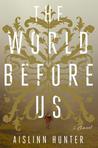
The world before her

The World Before UsThe World Before Us by Aislinn Hunter
My rating: 5 of 5 stars

The frequent comparisons between this book and A.S. Byatt's Possession are, I believe, misguided. Although both involve dual timelines and long-hidden secrets, Hunter's book focuses on memory, and eschews satire and verbal pyrotechnics.  Instead, she takes us inside the ghosts? shades? spirits? of the long-dead actors in a story connected to a long-shuttered Victorian asylum and a Victorian botanist. She shades struggle to remember who they were, and how their stories intertwined. So does archivist Jane Standen, whose dissertation included the asylum, and whose job is ending at the museum where she works is closing.

She has long been haunted by the disappearance of a girl from the asylum, known only as N, when she and two men walked to the botanist's house. The men returned; the girl did not. When Jane learns who is to speak at the gala for the museum's closing, she flees: The speaker, Jane's first crush, was the father of a little girl, Lily, who disappeared during a walk in the woods - when Jane was babysitting her. Jane goes to the village where both disappearances happened, searching for clues to the disappearance of N, and for clues to the tragedy that has defined her for many years.

An archivist preserves and sorts artifacts that keep the stories of a place and its residents alive. Some stories are more personal than others. N's disappearance might not have caught Jane's attention had Lily not disappeared. Others are less so, at least on the surface. The new owners of the botanist's house are recreating his gardens to be as they were in his lifetime.

As Jane reads the letters, journals, and logbooks, looking for clues into N's life and disappearance, the shades begin to recover their essences. As Jane begins a relationship with one of the gardeners, they also begin to remember how it felt to be alive, how their senses defined them.

The reader gets to absorb complexity in both timelines, and sees how Jane becomes more solid and complex as she assembles clues and allows the present - with risks and uncertainty - to to affect her as much as the past.

I was particularly taken by side-stories about the village and villagers, past and present, which deepened the theme of memory. One example: local miners who gather to remember their experiences as others, trapped, their stories told by the media, are in the long process of being rescued. The subterranean story illuminates the hope for salvation when the men can be brought to the surface to tell their own stories.

So, yes, this book is not Possession. Instead, it is a subtle tale of duality and memory, discovery and connection, which shines in its own, elegant, ultimately beautiful terms.

I received an ARC of this book from NetGalley, and this is an unbiased review.


View all my reviews

11.18.2014

Chamber Music

Chamber MusicChamber Music by Doris Grumbach
My rating: 5 of 5 stars

This rich novel is cast as the memoir of 90-year-old Caroline Maclaren, being written in the late 1970s at the request of her late husband's charitable foundation. Robert Maclaren was a a composer who was dubbed "America's Orpheus" for his use of American themes in his classical music. The marriage was rich in the world's admiration for his genius, but bereft of emotional depth between husband and wife. As his demands for the silent, solitary conditions he needed for composing became more extreme, Caroline's life became almost unbearably isolated and barren. Even her desire to accompany a singer on piano was thwarted by the increasingly-irascible Robert.

Early in the relationship, Caroline sensed that Robert had secrets that she could not define. There were hints of incest in his mother's behavior, and letters from a young man whose anguish and passion disturbed her. As time passed, his health and abilities deteriorated in a manner that others understood, even as she remained ignorant. She only learned the name of the illness after Anna, the nurse hired to help with his care, told her: syphilis.

Caroline spares nothing in her description of Robert's horrific decline, but says she only realized what it meant in the light of those old, passionate letters when Anna explained how the disease is transmitted.  She found that she did not feel grief, as other widows do:  " I felt none of that, for wife I was only in a sense, and woman I had not yet learned to be."

After Robert died, people from nearby Saratoga Springs helped to create the Maclaren Foundation, building six cabins on the wooded property to house a summer community for young composers. Anna remained and continued to plant flowers and vegetables according to science and ancient gardening lore.

It was Anna's comment about planting turnips and barley while naked that opened Caroline's lifelong repression of her need for love, physical and spiritual. She wooed Anna slowly, hardly understanding how two women can love.

Then, she writes, "I think of the first, soft spring rain; she was moisture to my dried roots... the way a certain configuration of notes played on the flute alone... can bring tears to one's eyes." They held hands and untangled the delicate roots of a wisteria vine. They were happy.

And yet, they never talked about their love: "a fitting vocabulary for such discussions did not exist." She knows now, as she writes, that women can walk together in daylight, but in her own time, "the world would not have sanctioned it, nor, for that matter, believed it of me." In fact, she writes, she is not entirely certain that such freedom is "...entirely salutary, whether the old must of chests, of closets, bell jars, and horsehair sofas is not a better climate for the storage of the private life."

Ah, but Doris Grumbach has no such hesitation. This delicate yet unflinching novel begins with the privileges of a talented man, and ends with the last thoughts of a woman who transcended the confines of her time. Books like this, and Ms. Grumbach's  The Ladies , remind the modern readers that walks in the sunlight are the product of struggles and courage. Caroline Maclaren writes that the Foundation may delete parts of her story, but she will continue to write her extraordinary truth.

Thanks to NetGalley for the book. This is an honest review.


View all my reviews